Manufacturers don’t usually wake up one morning and decide they need new software.
What actually happens is much less dramatic. Reporting starts taking longer. Production data lives in five different systems. Operators export spreadsheets because the ERP can’t answer a simple question. Someone suggests buying another platform. Six months later, everyone realizes the real issue wasn’t missing software – it was software that never worked together.
That explains why manufacturing projects have become more specialized over the past few years. Companies aren’t simply asking developers to build an application anymore. They’re looking for partners who understand factory operations, production workflows, industrial integrations, and the reality of modern manufacturing environments.
Some firms focus on enterprise-wide transformation. Others build custom production platforms, connect factory equipment, develop manufacturing dashboards, or introduce AI into existing processes.
Below are seven companies worth evaluating before starting your next manufacturing software project.
Before You Compare Vendors, Define the Project
Two manufacturers can search for manufacturing software development services while looking for completely different outcomes.
One company may need a production monitoring platform that collects data from machines across several facilities. Another wants to replace dozens of Excel-based workflows with a single internal application. Someone else is trying to connect an ERP with warehouse systems, while another business is experimenting with AI-powered document search for engineering teams. Those projects require different technical experience.
That’s why choosing a software partner starts with defining the business problem, not the technology stack. A company that’s excellent at large enterprise migrations may not be the best fit for a highly customized production dashboard. Likewise, a team with deep industrial IoT experience may not specialize in learning management systems or customer portals.
The companies below overlap in many areas, but each has developed its own strengths within manufacturing software.
1. Lionwood.software
Building Software Around Existing Manufacturing Processes
One assumption causes more expensive software projects than almost anything else: believing modernization requires replacing everything that’s already in place.
In reality, most manufacturers continue relying on systems that have evolved over many years. ERP platforms, production equipment, warehouse software, barcode scanners, internal databases, quality management tools, and dozens of smaller applications all support day-to-day operations. The challenge is rarely starting over. It’s making those systems work together without disrupting production.
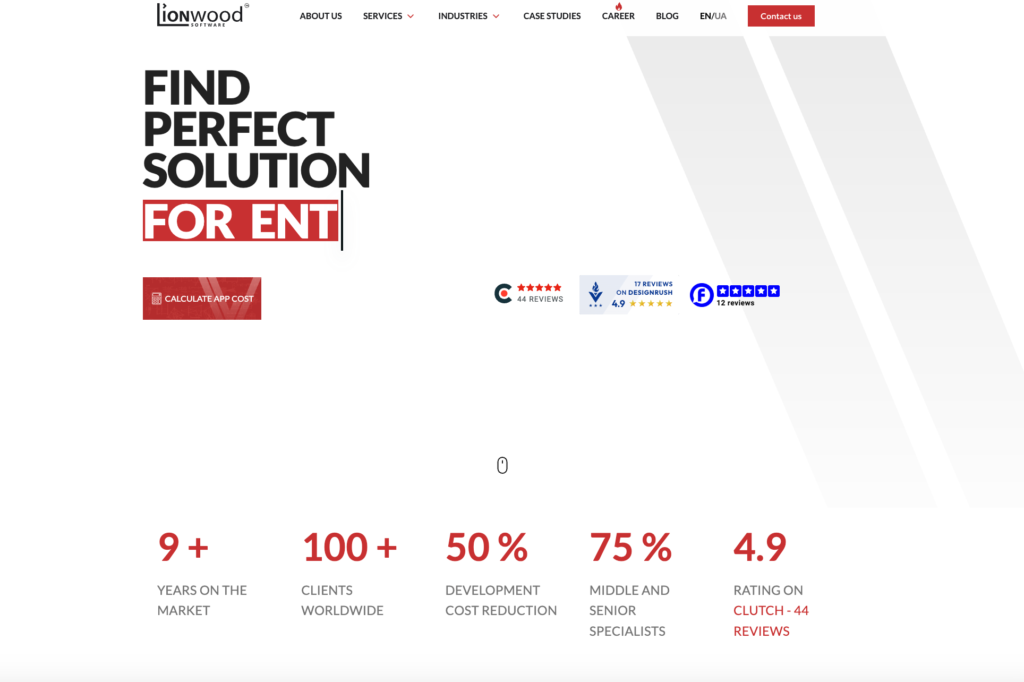
Lionwood.software manufacturing software development company, builds custom software with exactly that environment in mind.
Instead of offering a fixed manufacturing platform, the company develops solutions around existing operational processes. One project may involve integrating production data with a cloud dashboard. Another might connect MES workflows with warehouse operations. In another case, the focus could be on AI-powered search that helps engineers locate technical documentation across thousands of files within seconds.
The company’s engineering practice extends beyond manufacturing alone. Logistics platforms, enterprise cloud applications, AI integrations, industrial IoT, and custom business software often become part of the same solution when operations span multiple departments.
Rather than approaching every engagement with predefined software modules, Lionwood begins by understanding how information moves through the business today and where it breaks down.
At a glance
| Manufacturing expertise | ★★★★★ |
| Custom software | ✔ |
| AI integration | ✔ |
| Industrial IoT | ✔ |
| MES integrations | ✔ |
| Discovery Phase | ✔ |
| Cloud modernization | ✔ |
Typical manufacturing projects:
- Production monitoring platforms
- Manufacturing dashboards
- MES integrations
- Industrial IoT solutions
- AI-powered enterprise search
- Internal factory portals
- Cloud modernization
- Enterprise system integrations
Manufacturers that already have established production environments often benefit most from this approach because it improves existing operations instead of forcing a complete replacement of working systems.
2. SoftServe
Thinking Bigger Than a Single Manufacturing Application
Not every manufacturing initiative starts on the factory floor. Sometimes the goal is much broader: modernizing infrastructure, moving business systems to the cloud, improving data visibility across multiple plants, or introducing AI into enterprise operations.
Those projects usually involve several business units, large technology environments, and long implementation roadmaps.
SoftServe has built much of its manufacturing practice around programs like these. Rather than focusing on one production application, the company typically works across cloud architecture, industrial analytics, digital twins, connected factories, enterprise platforms, and AI initiatives. Manufacturing software becomes one component of a larger digital transformation strategy.
That makes SoftServe particularly attractive to organizations managing complex international operations where software decisions affect far more than production alone.
At a glance
| Manufacturing expertise | ★★★★☆ |
| Enterprise transformation | ✔ |
| Cloud engineering | ✔ |
| AI solutions | ✔ |
| Industrial IoT | ✔ |
| Digital twins | ✔ |
| Global delivery | ✔ |
Typical manufacturing projects:
- Enterprise modernization
- Industrial IoT platforms
- Digital twin initiatives
- Cloud migration
- Manufacturing analytics
- AI implementation
- Enterprise software integration
For manufacturers planning company-wide transformation rather than a standalone factory application, SoftServe brings experience managing projects at enterprise scale.
3. EPAM
When Manufacturing Is Part of a Larger Digital Ecosystem
Some manufacturing projects stop at the production line. Others quickly expand into customer portals, supplier platforms, data warehouses, mobile applications, and enterprise reporting. Before long, the original factory project has become an organization-wide modernization program.
EPAM is often involved in projects like that. Its engineering teams work across enterprise software, cloud platforms, AI, data engineering, product development, and large-scale integrations. Manufacturing software is usually developed as part of a wider technology landscape rather than as an isolated application.
That approach works well for organizations with mature IT environments where production systems need to exchange information with multiple business platforms.
At a glance
| Manufacturing expertise | ★★★★☆ |
| Enterprise software | ✔ |
| Cloud engineering | ✔ |
| AI & data | ✔ |
| System integration | ✔ |
| Product engineering | ✔ |
| Global delivery | ✔ |
Typical manufacturing projects:
- Enterprise manufacturing platforms
- Factory analytics
- Cloud modernization
- Data engineering
- AI-enabled production insights
- Legacy application modernization
- Cross-system integrations
EPAM is generally strongest when manufacturing software forms one part of a much broader digital transformation initiative.
4. Intellias
Building Connected Manufacturing Environments
A modern production facility generates enormous amounts of information. Machines, sensors, warehouse systems, production schedules, maintenance records, and quality inspections all create valuable data. The challenge isn’t collecting it anymore. It’s turning that information into something production managers can actually use.
Intellias has developed considerable experience around connected systems. Its manufacturing projects frequently involve industrial IoT, cloud-native software, production visibility, and enterprise integrations that help companies understand what’s happening across multiple facilities in real time.
Instead of replacing factory systems, many projects focus on making existing technologies communicate more effectively.
At a glance
| Manufacturing expertise | ★★★★☆ |
| Industrial IoT | ✔ |
| Cloud-native development | ✔ |
| Enterprise integration | ✔ |
| AI solutions | ✔ |
| Data platforms | ✔ |
| Digital transformation | ✔ |
Typical manufacturing projects:
- Connected factory platforms
- Industrial IoT solutions
- Production visibility dashboards
- Manufacturing analytics
- Cloud applications
- Enterprise integrations
Manufacturers investing in connected operations and long-term digital modernization often include Intellias on their shortlist.
5. GlobalLogic
Product Engineering Experience Applied to Industrial Software
GlobalLogic approaches manufacturing from a product engineering perspective.
Instead of concentrating solely on internal factory systems, the company frequently develops connected digital products, embedded software, cloud platforms, analytics solutions, and enterprise applications that support manufacturing organizations.
That experience becomes valuable when production software needs to interact with connected devices, customer-facing applications, or broader digital ecosystems.
At a glance
| Manufacturing expertise | ★★★★☆ |
| Product engineering | ✔ |
| Embedded systems | ✔ |
| Cloud platforms | ✔ |
| AI capabilities | ✔ |
| Enterprise software | ✔ |
| UX engineering | ✔ |
Typical manufacturing projects:
- Connected industrial products
- Embedded software
- Manufacturing platforms
- Cloud modernization
- Digital engineering
- Enterprise applications
GlobalLogic is often a strong option for manufacturers building software products alongside internal operational systems.
6. N-iX
Balancing Technical Depth With Flexible Delivery
Some manufacturers don’t need hundreds of engineers assigned to a project. They need a capable development partner that can integrate with internal teams, modernize existing software, and gradually expand the platform over time.
That’s where N-iX often fits. The company delivers cloud software, enterprise platforms, manufacturing applications, AI solutions, and system integrations while working closely with customer engineering teams. Many engagements begin with a dedicated team and grow alongside the product itself.
At a glance
| Manufacturing expertise | ★★★★☆ |
| Dedicated teams | ✔ |
| Cloud engineering | ✔ |
| AI integration | ✔ |
| Enterprise software | ✔ |
| System integration | ✔ |
| Long-term delivery | ✔ |
Typical manufacturing projects:
- Manufacturing software
- Cloud migration
- Factory portals
- AI integration
- Enterprise modernization
- Production management systems
N-iX is well suited to organizations looking for long-term engineering capacity rather than a single delivery project.
7. Sigma Software
Practical Engineering for Industrial Organizations
Sigma Software has worked with manufacturers across Europe for many years, delivering custom business software, cloud applications, industrial platforms, and enterprise solutions.
Rather than focusing on one narrow specialization, the company combines software engineering, cloud technologies, analytics, and digital transformation to solve operational challenges across manufacturing businesses.
Its experience working with Nordic and European companies also makes it familiar with the regulatory and operational requirements common in those markets.
At a glance
| Manufacturing expertise | ★★★★☆ |
| Enterprise software | ✔ |
| Cloud development | ✔ |
| Data & analytics | ✔ |
| AI capabilities | ✔ |
| European delivery | ✔ |
| Custom engineering | ✔ |
Typical manufacturing projects:
- Manufacturing platforms
- Enterprise software
- Production dashboards
- Data analytics
- Cloud modernization
- Industrial applications
Sigma Software is a solid choice for manufacturers looking for an experienced European engineering partner with broad enterprise capabilities.
Not Every Manufacturing Software Project Needs the Same Partner
Treating every vendor as interchangeable is one of the quickest ways to choose the wrong development partner.
If your priority is custom manufacturing software built around existing production processes, companies like Lionwood.software offer strong expertise in tailored engineering and industrial integrations.
Organizations planning large enterprise transformation initiatives may lean toward providers such as SoftServe or EPAM, where cloud modernization and enterprise architecture are central strengths.
Manufacturers investing in connected factories and Industrial IoT often evaluate Intellias, while businesses developing digital products alongside manufacturing systems may find GlobalLogic particularly relevant. Companies looking for dedicated engineering teams frequently shortlist N-iX, and Sigma Software remains a strong option for broad custom software development across European industrial markets.
The best choice depends less on company size and more on how closely a vendor’s experience matches the project you’re actually trying to deliver.
Questions Worth Asking Before You Sign a Contract
A polished presentation rarely tells you how a software project will unfold. The better questions usually focus on execution.
- Have you integrated with manufacturing equipment or MES platforms before?
- How do you approach legacy system modernization?
- Who owns the architecture and technical documentation?
- How will production downtime be minimized during implementation?
- What happens after the initial release?
- Can the development team scale if the project grows?
- How do you validate requirements before development starts?
The answers often reveal more about a development partner than a portfolio of finished projects.
FAQ
What does a manufacturing software development company do?
It designs, develops, integrates, and maintains software used in manufacturing operations, including production management, MES integrations, Industrial IoT, analytics, cloud platforms, and internal business systems.
Should manufacturers buy software or build custom solutions?
It depends on the project. Standard business processes may be covered by commercial software, while unique production workflows often benefit from custom development.
What technologies are commonly used in manufacturing software?
Cloud platforms, .NET, web applications, Industrial IoT, AI, data analytics, APIs, ERP integrations, and MES connectivity are among the most common technologies.
How long does a manufacturing software project usually take?
Smaller internal applications may take a few months, while enterprise modernization programs involving multiple production systems can extend well beyond a year.
Modern Manufacturing Runs on Connected Systems
Factories don’t become more efficient simply by adding new software. The biggest improvements usually come from connecting information that already exists, linking production, warehouse operations, quality management, engineering, and business systems into a workflow that gives teams better visibility and faster decisions. The right software partner understands that the goal isn’t replacing technology for the sake of it. It’s building systems that make manufacturing run more effectively for years to come.